
Which eSIM is best when traveling to Asia? An honest Sim Local eSIM review

*Disclaimer: this is a sponsored post, and I will be sharing an affiliate link. These are all my honest thoughts on my personal experience using Sim Local and other eSIM providers when traveling abroad. If you found value out of this post, I’d sincerely appreciate your support by checking out Sim Local through my link or use my code DIRECTIVE5 and get 5% off your plan!
I’m someone who loves to travel internationally, but I also love having access to cellular data while I’m on my trips as well. This is important for staying in contact with people, looking up places of interest, maintaining my itinerary, and most importantly, playing Pokemon Go (especially in Japan).
By default, you might just think of using an international version of your existing cellular plan. As a Verizon customer, the international plans they offer for their customers are quite cost-prohibitive. Verizon’s TravelPass is $12/day and while you do get unlimited data, text, and calls, a 17-day trip (which was the duration of my last trip) would cost $204. Other carriers might have more affordable options, but in my case, this is a no-go for me.
This is why I absolutely love the introduction of prepaid eSIMs which are so easy to install and so convenient to use while traveling, and way more affordable! Because you can purchase them before your trip and download them straight onto your phone, it’s one less stop to make when you get to your destination and you have data access immediately. Once I started using travel eSIMs, I could never go back.
How do eSIMs benefit you while traveling?
Having a data eSIM has been a game-changer for travel and is now an essential. Prior to these, I would either go without data and rely solely on paper itineraries and handwritten turn-by-turn directions (wild, I know), or rent a phone in my travel destination which also was not the most cost-effective option.
Nowadays, I can use my phone pretty much like I always do. The only caveat here has been that I did not have a usable phone number to receive texts or calls through since eSIMs typically only offer data plans. I rarely make or take phone calls anyway, so this was not a huge issue, but being unable to receive SMS has been a tad inconvenient.
What eSIM providers have I used in the past?
Airalo
Airalo was the first eSIM provider I used while traveling abroad. For a first-timer it was really easy to set up and considerably affordable. I found on Airalo that my data speeds often dropped below what was promised so I would often get 4G/LTE instead of 5G. For this reason, I’ve generally stopped using Airalo.
Ubigi
Ubigi quickly became my eSIM provider of choice in recent years. It is similarly easy to set up and use, and the price point is very similar to Airalo. In my previous experience using Ubigi, it was pretty seamless, speeds were consistent and reliable, and reception was good.
Introducing Sim Local
For my most recent trip, I took a 17-day trip to Japan and Mainland China. This time around I used Sim Local as my eSIM data provider because they offered an Asia Regional plan that covered both countries and offered a phone number that could use SMS and voice in addition to 20GB of data. (link to Asia Regional plan). The SMS and voice were limited to 50 SMS and 15 international minutes, but I estimated that would be more than enough for me for the duration of the trip. If this plan sounds right for you, get 5% off your own plan by visiting them through my link or using my code DIRECTIVE5.
What did I like about Sim Local’s eSIM?
Setting up the eSIM
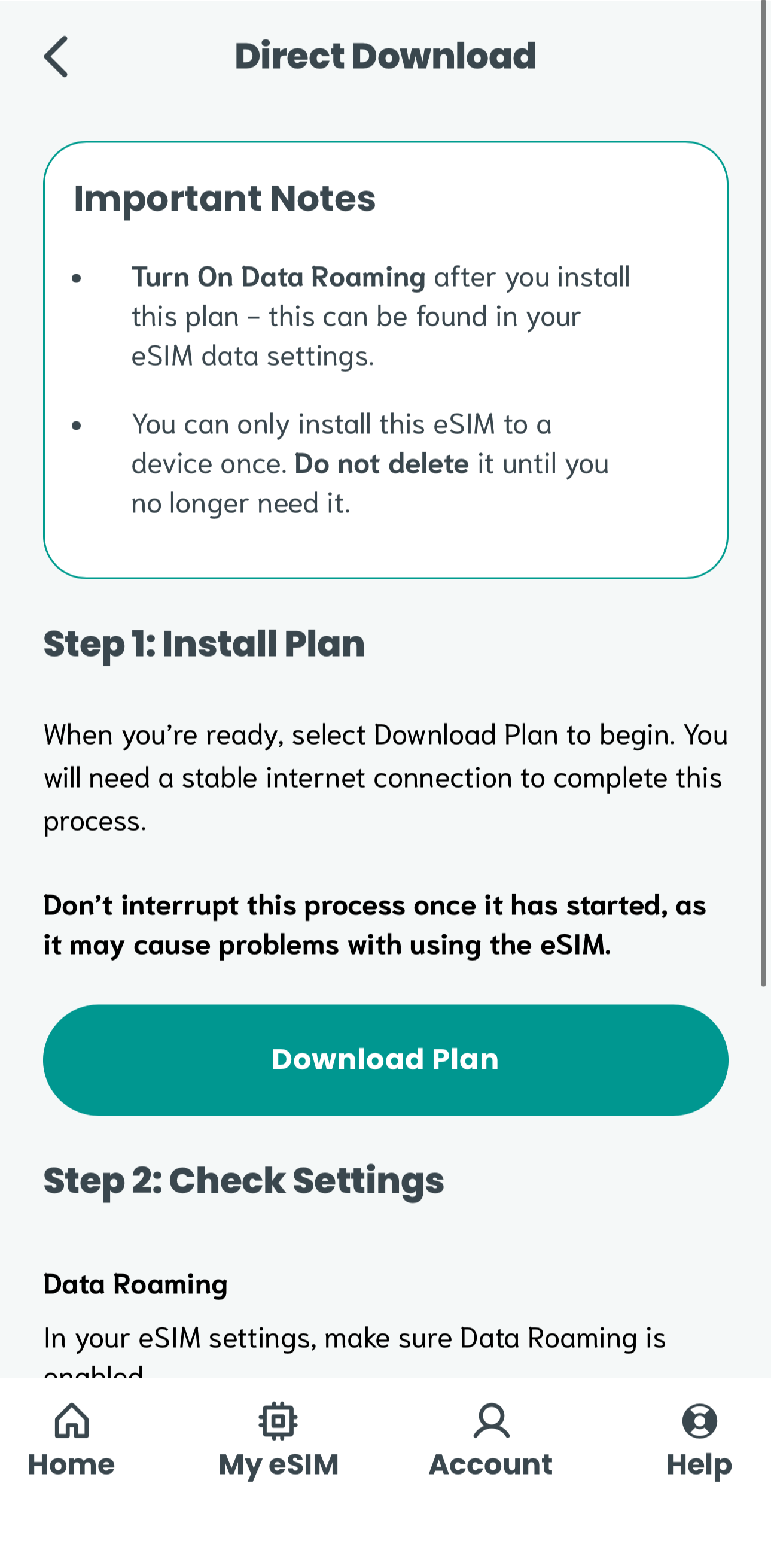
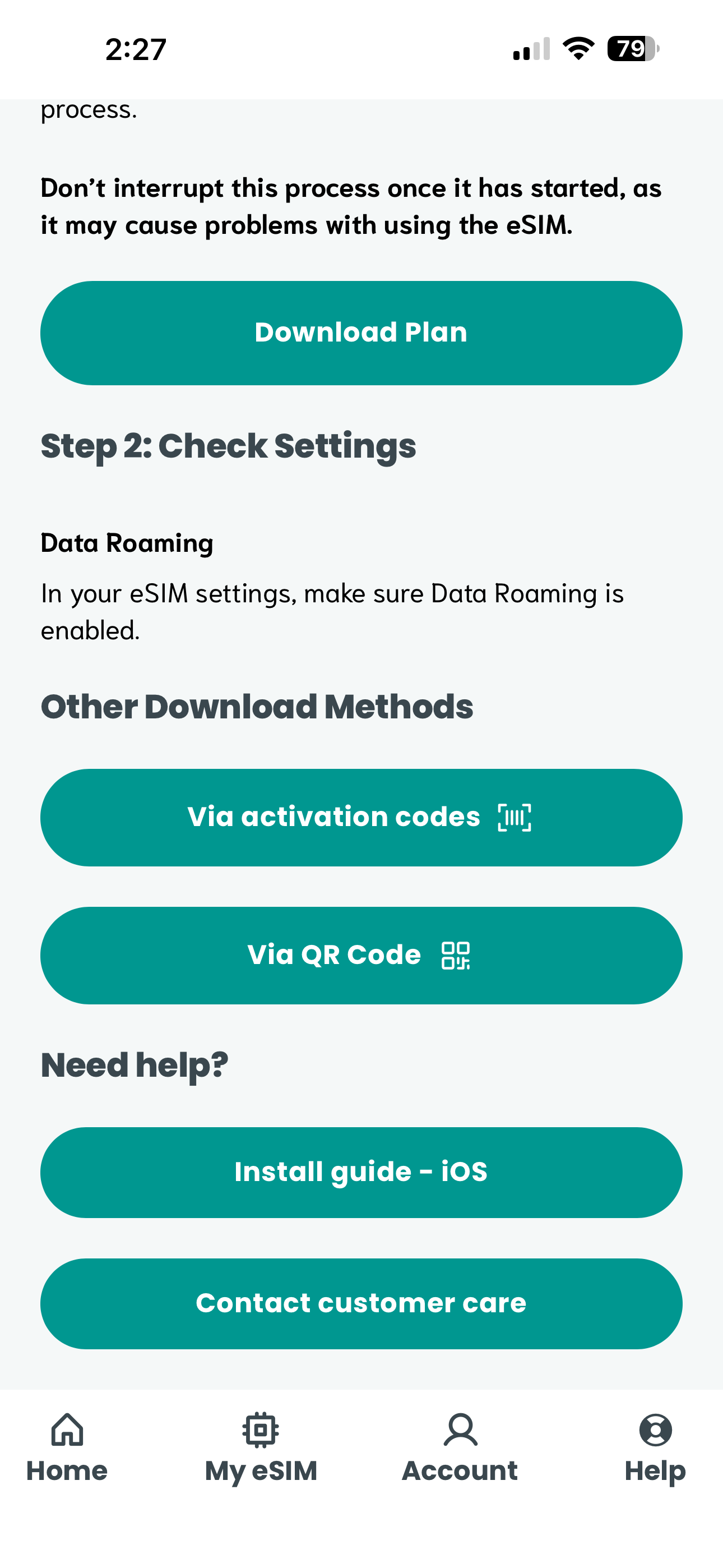
Setting up the Sim Local eSIM was seamless and easy, just like other eSIM providers I’ve used in the past. They offer instructions that are super easy to follow and I installed the eSIM a few days ahead of my trip without any issues. All I had to do was activate the eSIM when I landed in Japan and everything worked out of the box!
Additional SMS and voice
I was actually surprised by how convenient having the additional SMS and voice was on this trip! I had gotten so used to not having anything but data access that I didn’t realize how nice it was to be able to receive SMS confirmation texts for different things and the ability to make phone calls when needed.
In Japan, I was able to make reservations where a phone number was needed in order to receive confirmation text messages.
But this actually turned out to be the most helpful for the China leg of my trip. The first hotel of our stay offered free airport shuttle pickups, but as the guest you were required to reserve the shuttle by calling them and communicating via WeChat the day before your arrival. Since we were flying into China from Japan rather than my home country, I didn’t have access to my domestic phone number in order to call them. So it was great that I had my French phone number from Sim Local to facilitate this call with them in order to make my shuttle reservation.
Additionally, I found that I actually needed to provide a valid phone number numerous times throughout the trip to get verification codes for things like Wifi or other things.
This added convenience without the additional cost is really what’s convinced me that Sim Local is the best eSIM for Asia trips from here on out.
Reception and reliability
I found that the data reception was extremely reliable for my entire trip.
Occasionally, I ran into an issue where I’d lose reception and enter SOS mode. This happened twice during my trip, but it was easy to fix; I just needed to restart my phone and everything went back to normal.
As far as data speeds went, I had 4G for my whole trip, and this was consistent in both Japan and China. The package offering states that it offers 4G data speeds, so this behaved as I expected. Other data plans do offer higher speeds, but in all honestly, I didn’t really notice a difference so 4G was sufficient for me.
I will not pretend to know anything about the Great Firewall in mainland China, but I’ll also add that while I was there, I had no issues accessing all my normal apps like Google, Instagram, etc. so I was pretty much unaffected while I was in the country through my Sim Local data, which was great! I actually ended up using my data more often than any local wifi network since the wifi did block certain apps (and I needed to be on VPN) and my data didn’t.
Data sharing
Throughout our trip, I was able to allow my partner to tether to my data plan for devices that did not have their own data connectivity. This made it more convenient for both of us to have internet access wherever we needed it on whatever device.
Seamless transition across countries
Through only the one plan that I purchased, I was able to easily travel from the United States to Japan then to mainland China without any interruptions to my data access. I really appreciated how seamless it was. As soon as we touched down into Shanghai, I turned off airplane mode and my data was functioning perfectly and everything was good to go! Having just one SIM for multiple countries was so convenient, I wish I had known about Sim Local during my last multi-country Asia trip back in 2023 when I visited Vietnam, Singapore, and Japan. This eSIM would have been perfect for that trip as well since it covers all the countries in one!
What are some caveats to using Sim Local?
Phone number
One thing to be aware of is that the phone number that comes with the Asia Regional plan is a French-based phone number. It will not be a local phone number.
In general this did not prove to be an issue, but occasionally there were places that required a local phone number that I could not use my number for. Most places did accept foreign phone numbers though, so this was only an issue very rarely.
Checking usage
With the Sim Local app, I wasn’t able to check my data usage during my trip. This was something that I did like having from other eSIM providers. However, this wasn’t really an issue since I didn’t believe I’d be at risk of needing to top up on data, it was just something I was a bit curious about.
You’re supposed to be able to check your usage by dialing #123#, but for some reason that wasn’t working for me. I could have reached out to them on WhatsApp to get clarification while on my trip, but I never got around to it, so it wasn’t too big of a deal to me.
Alternatively, I just looked at my cellular settings on my phone to see how much data I had used, so this was a good enough checkpoint for me.
How does Sim Local compare to other eSIM providers?
The Sim Local Asia regional plan that I used offered 20GB of data along with 50 SMS and 15 minutes of calling for $35 USD.
For a comparable data package size, Ubigi offers a 25GB data plan for 30 days in Asia for $44 USD. This is more expensive compared to Sim Local and does not come with SMS and voice.
A 20GB data package for 30 days from Airalo is closer in price to Sim Local at $39 USD, but also doesn’t come with SMS and voice.
I’ve provided the data plan content details in the table below for easy comparison. (Please note all prices here are as of March 2026)
| Provider | Duration | Data | Cost | SMS | Voice Minutes |
|---|---|---|---|---|---|
| Sim Local | 31 days | 20GB | $35 USD | 50 | 15 |
| Ubigi | 30 days | 25GB | $44 USD | 0 | 0 |
| Airalo | 30 days | 20GB | $39 USD | 0 | 0 |
| Verizon | 31 days | Unlimited | $372 USD (for 31 days) | Unlimited | Unlimited |
Overall I do believe that the value derived from a Sim Local plan is higher than that of other eSIM providers that I’ve used in the past.
Pricepoint-wise it’s actually cheaper than other providers, but with the additional SMS and voice capabilities, it gave me more peace of mind when traveling that I could be contacted by anyone who needed to reach me while I was out of the country. And it came in handy in helping me coordinate logistics from one country to the other.
And if you really don’t need calls or SMS they have cheaper data-only plans which would perform similarly to other data-only eSIM providers.
Who is a Sim Local eSIM best for?
In my opinion, Sim Local offers data plans that are great for everyone whether you’re traveling solo or with a small or large group.
As a solo traveler, having a data plan that offers SMS and voice allows you to stay fully connected to people back home, giving you and them comfort in knowing that you can always be contacted.
For groups, you can stay in communication during your travels if members in your party are splitting up and want to coordinate individually throughout the trip. The data sharing aspect is also great if someone in your party doesn’t have internet but needs some access in a pinch.
Overall thoughts
I would say that I had a great experience with my Sim Local eSIM!
They offered a package that completely fit my needs at a very affordable price ($35 USD compared to the $204 it would otherwise cost me with my domestic carrier’s travel plan). The connection and the overall experience was smooth and seamless, I ran into very few issues with the service itself, and it felt like I was using my phone just like I was back at home.
I’ll definitely be using it on my next international trip coming this summer!
If you’d like to give them a try on your next trip (to Asia or elsewhere!), check them out using my affiliate link or use my code DIRECTIVE5 and you can get 5% off on your plan.
Happy travels!